TrueHarvest Cocoa
The bean is not the crop.
TrueHarvest Cocoa is the lead project and the reference case for the whole platform: an end-to-end, traceable, organic, circular cocoa enterprise buying the whole pod rather than the bean, and monetising four output streams where the market conventionally buys one. It is the operating-first argument made inside a single value chain, where it can be checked. Where it buys, and from whom, is described under NDA.
- Class
- Circular value chains
- Geography
- Cameroon
- Development stage
- Lead project
- Regenera’s role
- Developer and structurer
Opportunity
Most of the plant is left behind, and most of the margin with it.
Cocoa is bought and sold as a bean. The bean is the smaller part of what the tree actually produces; the pulp, the shell and above all the husk are left at the farm gate, composted informally or burned, because no channel exists to sell them. The convention is old enough that it reads as a property of the crop rather than a gap in the supply chain.
TrueHarvest buys the whole pod. Nothing about the agronomy changes — no additional land, no new species, no second harvest. What changes is how many buyers the same pod can reach, and therefore how the margin is assembled: from four output streams with four different demand curves, rather than from one commodity print that the grower and the buyer both have to live with.
This is also why the project needs no carbon subsidy in order to work. Carbon is real here — pod husk pyrolysed to biochar is durable and measurable — but it sits on top of an operating business rather than underneath it. If the voluntary market closed tomorrow, the enterprise would still be an enterprise. That sequence, operating first and carbon second, is the platform’s whole position, and TrueHarvest is where it is demonstrated.
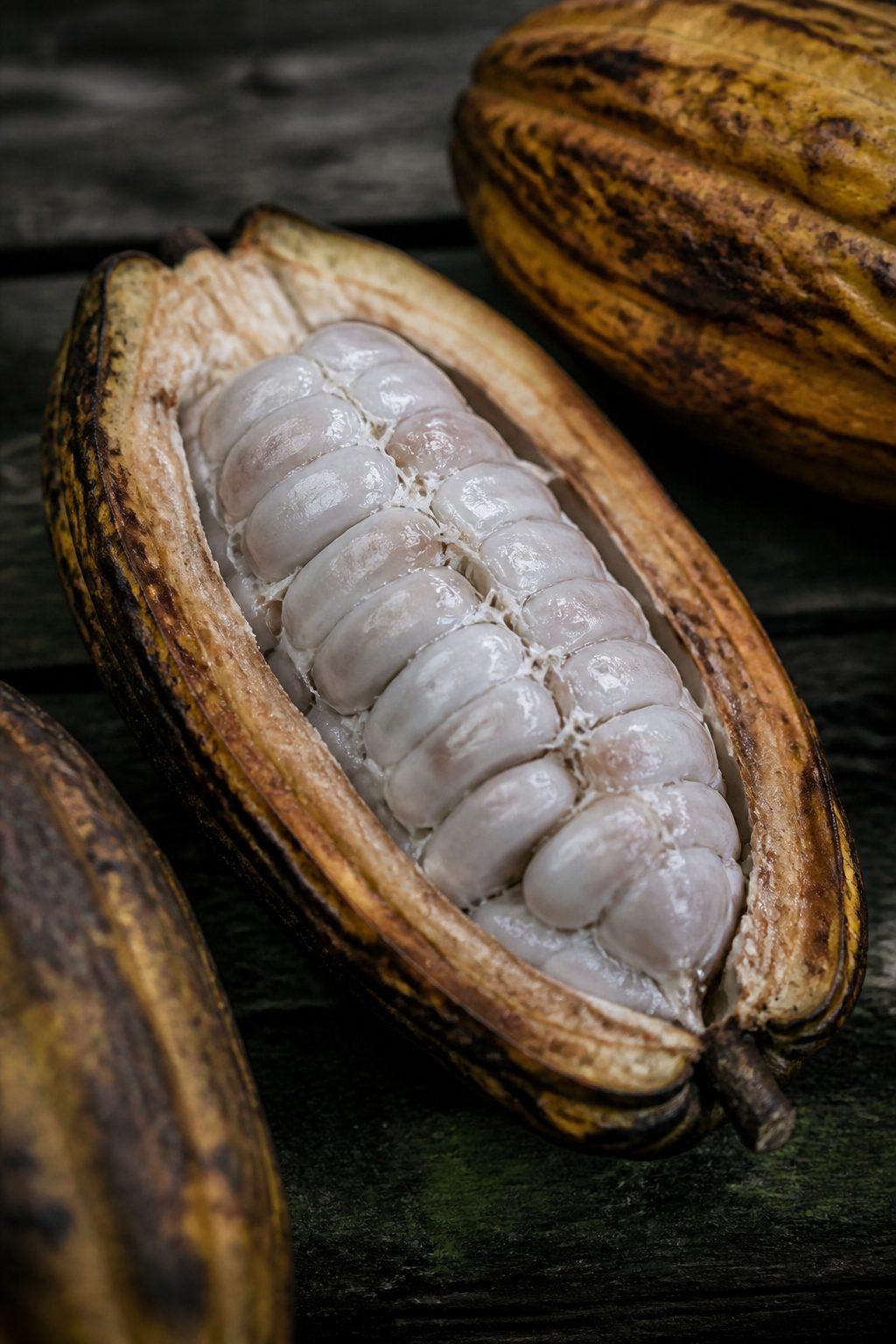
Theobroma cacao
Beans and mucilage, the circular fractions
Four buyers for one harvest. The land is not asked to work harder for the second, third and fourth.
Place and context
A value chain in Sub-Saharan Africa, filed under circular value chains.
TrueHarvest sits in the circular value chains class: whole-crop buying and processing held at origin, so a single harvest reaches several markets instead of the one fraction convention trades. It is underwritten as an operating business, with carbon as optionality — not under a nature or carbon claim.
Geography is published at continental level and no finer. Where the enterprise buys, and from whom, is described under NDA once an enquiry is specific.
What is being developed
One pod, ruled into four products.
Fractions of a single specimen, in the order the process releases them.
- 01Semen cacao
Beans
The conventional line
Fermented and dried to origin specification and sold into exactly the market every other exporter sells into. It is the smallest part of the thesis and the only part the commodity price governs — which is precisely the argument for the other three.
- 02Pulpa
Mucilage
Recovered, not lost
The sweet pulp around the beans is consumed by the fermentation box; conventionally it is a process input that never becomes a product at all. Drawn off first, it becomes a juice and concentrate stream sold to beverage and food-ingredient buyers who have never traded a cocoa bean.
- 03Testa
Shells
A by-product with its own buyers
Cascarilla — the fine shell lifted off the roasted bean — carries flavour and fibre into infusion and food-ingredient markets. It leaves the process graded and bagged as a product, rather than swept up as a disposal cost.
- 04Pericarpium
Husks → biochar
Returned to the soil, and to the grower
The husk is the largest fraction of the pod and the one with no conventional home whatsoever. Pyrolysed to biochar it goes back to the growers as a soil amendment, and the carbon it fixes is durable and measurable — optionality layered on an operating margin, never the reason for the project.
Operating and revenue model
Margins decoupled from the bean price.
An end-to-end, traceable, organic, circular cocoa enterprise buying the whole pod rather than the bean, processing it at origin and monetising four revenue streams. EUDR-native by design; margins decoupled from the bean price.
The margin is assembled from four output streams with four different demand curves rather than from one commodity print. Carbon and biodiversity revenue is optionality on top of that operating base — never the thesis.
Ecological and social outcomes
The soil the supply depends on improves alongside the income.
Biochar returns to the producer organisations instead of being sold away from them, so the soil the supply depends on improves alongside the income. The carbon it fixes is durable and measurable — optionality layered on an operating margin, never the reason for the project.
Benefit-sharing is written and audited under the platform standard; free, prior and informed consent is a precondition rather than a consultation. Those are clauses, not commitments — which is the difference the standard exists to make.
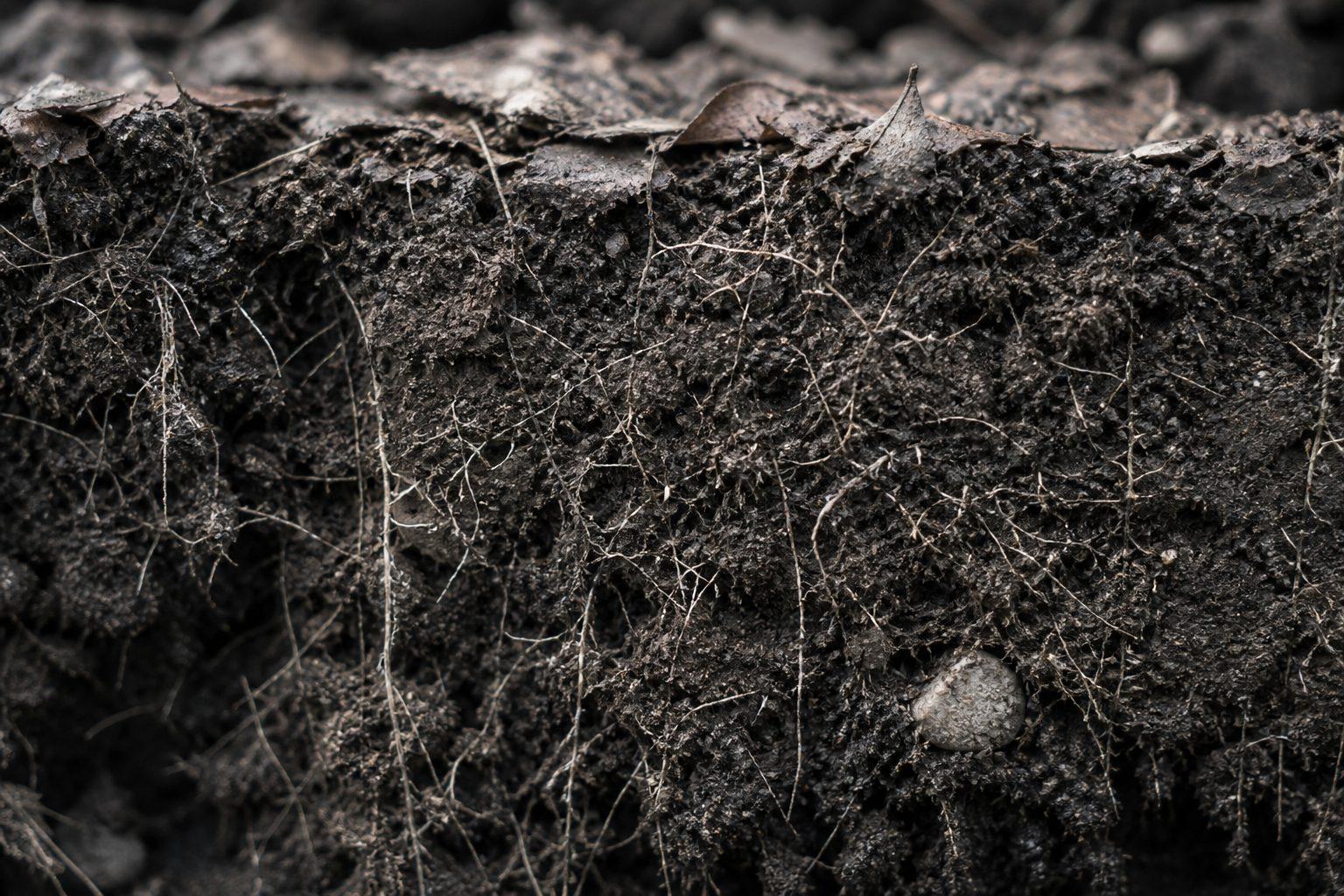
Humus horizon, root and hyphal network
Partners and local implementation
A durable supply base is an asset-quality question, not a philanthropic one.
TrueHarvest buys whole pods from producer organisations at a living-income reference price. That is stated as a term of trade rather than as a social programme, because it is one: the supply base is the asset, and an asset only underwrites if it is still there in a decade.
A grower who cannot make a living from the crop does one of three things. They diversify away from it, and volume falls. They sell to whoever happens to be at the gate, and traceability falls with it. Or they clear more land to make the arithmetic work — which is the one outcome that ends market access outright. Paying for the whole pod raises income from the same ground rather than asking for more of it.
Origination, offtake, logistics and market access are delivered under contract by counterparties outside the joint venture. The functions are fixed and published; the names behind them are disclosed under NDA.
Development stage
The lead project, and the reference case for the platform.
TrueHarvest Cocoa is the lead project and the reference case for the platform: the operating-first argument made inside a single value chain, where it can be checked. A dedicated investor deck is available on request.
Regenera’s role
Developed and structured as a long-duration operating business.
Regenera develops and structures the enterprise as a long-duration operating business, held through its own project vehicle so that land, country and permanence risk are contained where they are taken. Carbon and biodiversity revenue is layered on top of the operating base.
The written integrity standard — consent, benefit-sharing, biodiversity baselines, third-party measurement, reporting and verification, and no-go criteria — governs the project before capital, not after.
Measurement and verification
Deforestation-free provenance is market access, not virtue.
The EU Deforestation Regulation makes plot-level geolocation and a due-diligence statement the condition of placing cocoa on the European market. A chain that cannot produce the geometry of the plot a bean came from does not receive a lower price for it; it receives no market for it.
Treated as a compliance exercise this is a cost centre and a scramble against a date. Treated as architecture it is the same record a buyer, an auditor, a regulator and an underwriter each ask for, captured once, at origin, as an output of the buying process. That is the choice the project made at inception.
- 01
Geolocation at the point of purchase
Coordinates are captured where the pod is bought, by the person buying it — not reconstructed from a shipping document months later, when the plot has become an average.
- 02
Due-diligence statements as an output
The statement falls out of the buying record rather than being assembled for an audit. Nothing has to be reconciled after the fact, because nothing was recorded twice.
- 03
One standard across the platform
The same record is captured for commodities the Regulation does not yet cover, so its scope can widen without the chain changing.
- 04
Provenance as asset quality
A traceable supply base is a diligenceable one. The reason to build the record is not the regulator; it is that an asset whose provenance can be tested is worth more than one whose cannot.
- 05
Third-party measurement, reporting and verification
Carbon and biodiversity outcomes are measured, reported and verified by third parties under the platform standard, with baselines established before intervention rather than reconstructed afterwards.
Regulation (EU) 2023/1115
Engagement opportunities
The useful first conversation is about evidence.
Development-finance and blended-finance institutions, impact and nature-focused funds, family offices and co-investors at project level: say which structure you are testing, and what evidence would settle it. Offtake and operating counterparties: say what you buy, and at what specification.
Projections, structuring detail and the project deck move under NDA, and further detail sits in a data room on request.
Take it further
Projections, structuring detail and the project deck move under NDA. The useful first conversation is about what you would need to see.

Crown shyness — reference specimen
Closed canopy from below
PL. 11
Disclosure & data room
What is public, what follows registration, and what sits in the data room.
What is public here is the class, the venture and the method. Project detail, projections and structuring move to the Opportunity Room after registration and approval, and further detail — decks, models and the record behind them — sits in a data room on request, under NDA.